

Introduction: Why Field Service Tools Matter Today
Field service businesses depend on digital systems to manage technicians, scheduling, and customer jobs efficiently. Many companies begin with free tools to reduce costs, especially in the early stage. While this approach works initially, growth often exposes the limitations of basic systems and creates the need for more advanced solutions.
What Free Field Service Tools Offer
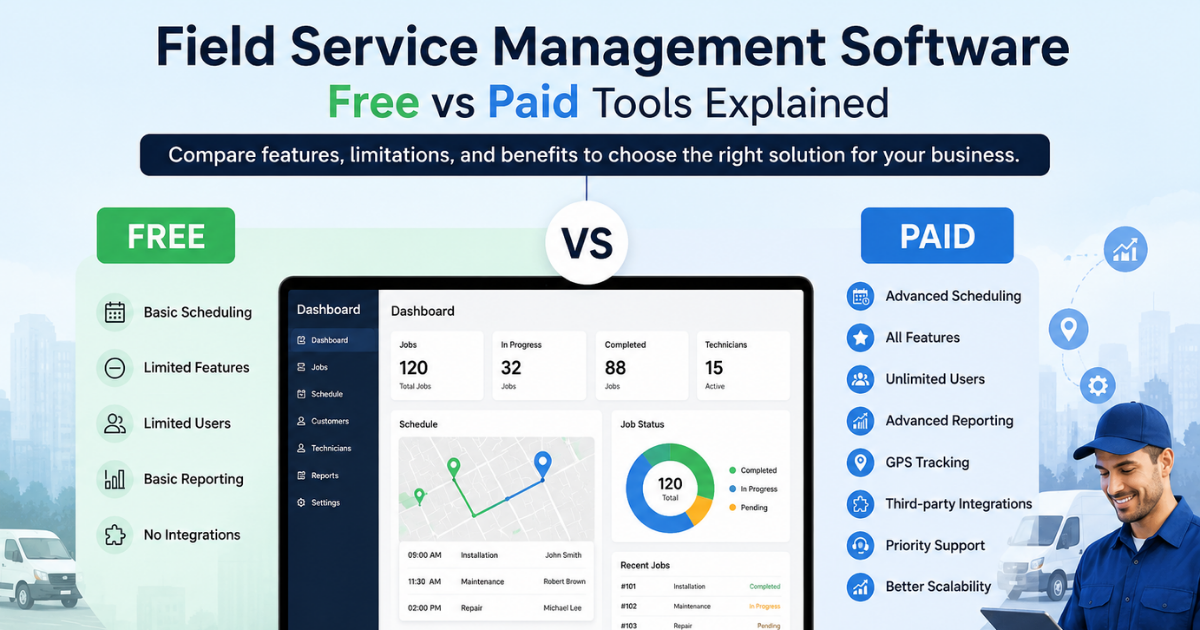
Free tools generally include basic features like job scheduling, task assignment, and simple customer tracking. These versions of Field Service Management Software are useful for small teams that handle a limited number of jobs. They allow businesses to digitize operations without upfront investment.
However, free systems usually lack automation, detailed reporting, and integration options. As a result, teams may still rely on manual processes, which can slow down operations over time.
Limitations of Free Systems
As operations grow, limitations become more visible. Free platforms often restrict the number of users, storage capacity, and advanced features. Many also lack GPS tracking, offline access, and real-time updates, which are essential for field teams working in different locations. These gaps can reduce productivity and impact service quality.
When Paid Solutions Become Necessary
Paid Field Service Management Software is designed for scaling businesses. It offers advanced features such as automated scheduling, route optimization, GPS tracking, and CRM integration. These tools improve coordination between office teams and field staff while reducing delays and errors.
Benefits of Upgrading
Upgrading to a paid system improves efficiency, accuracy, and customer satisfaction. Businesses gain better control over workflows, faster job completion, and improved communication. This leads to higher productivity and better service delivery.
Conclusion
Free tools are useful for starting out, but they are not built for long-term growth. Investing in Field Service Management Software helps businesses scale smoothly, improve operations, and stay competitive in the service industry.