


Every app you enjoy using and every website you trust has one thing in common: thoughtful design. When a product feels simple, smooth, and natural, that is not luck. It is the work of skilled UI/UX Designers in Hyderabad and across the world who plan each screen, button, and step with real care. In this guide, we explain what UI/UX design actually means, why it matters so much for your business, and how good design quietly drives growth.
1. What Is UI/UX Design?
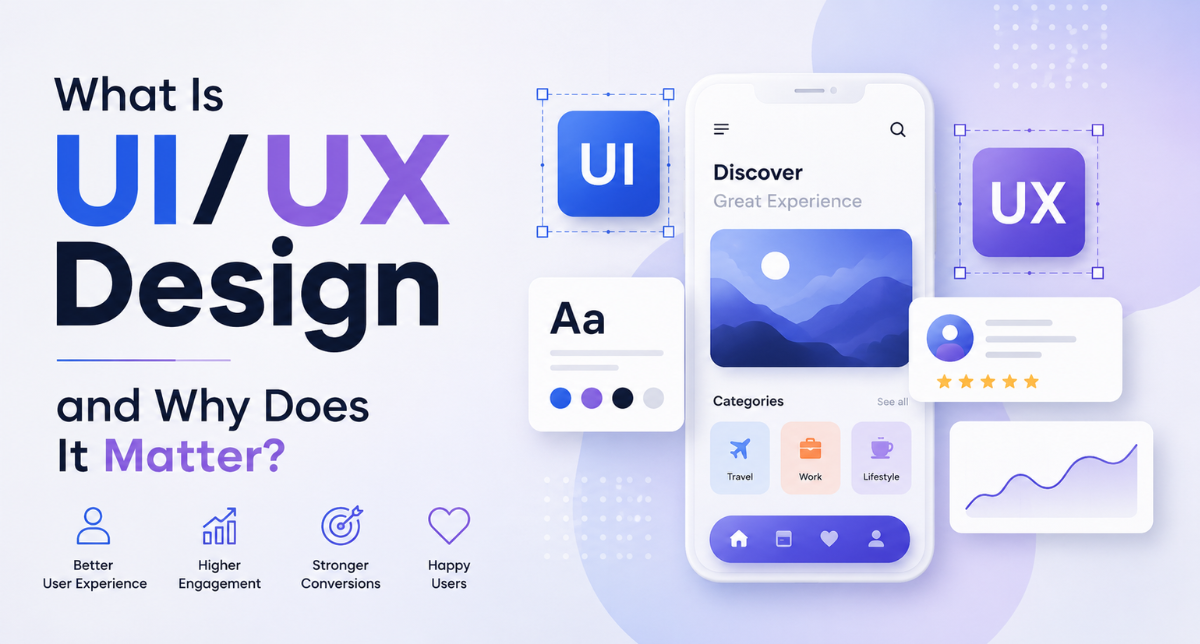
UI/UX design is the practice of shaping how a digital product looks and how it feels to use. UI stands for User Interface. UX stands for User Experience. Together, they decide whether a person finds your app or website easy and pleasant, or confusing and frustrating.
Think of a product like a house. UI is the paint, the furniture, and the layout you can see. UX is whether the rooms are placed sensibly, whether the doors open the right way, and whether you can move around without bumping into walls. You need both to feel at home.
2. UI and UX: What Is the Difference?
Many people use these terms together, but they are not the same thing.
User Interface (UI) is about the visual side. It covers colours, fonts, icons, spacing, buttons, and the overall look. Good UI feels clean, modern, and consistent on every screen.
User Experience (UX) is about the journey. It covers how a user moves from one step to the next, how quickly they finish a task, and how they feel along the way. Good UX removes friction, so the user never has to stop and think, “Wait, what do I do now?”
A product can look beautiful but still be painful to use. It can also be plain but a joy to use. The best products get both right.
3. Why Does UI/UX Design Matter for Your Business?
Design is not just decoration. It is one of the strongest reasons people stay with a product or leave it.
When a user opens your app, they form an opinion within seconds. If the screen is cluttered or the next step is unclear, many simply close it and try a competitor. On the other hand, when the flow is smooth, they trust you more and explore further.
For Indian businesses serving a huge, mobile-first audience, this matters even more. People use apps on every kind of phone and network speed. Clear, simple design ensures that a first-time user in a small town and a power user in a metro both have a good experience.
4. The Role of UI/UX Designers in Hyderabad
Hyderabad has grown into one of India’s leading technology hubs, with HITEC City, T-Hub, WE Hub, and global campuses spread across Cyberabad. This ecosystem has created a strong pool of UI/UX Designers in Hyderabad who understand both global standards and Indian users.
These designers do far more than make screens look nice. They research how real users behave, map out user journeys, build wireframes and prototypes, test ideas, and work closely with developers to bring designs to life. Because they sit close to a busy startup and product culture, they are used to solving practical problems quickly, not just producing pretty pictures.
For any company building a digital product, partnering with experienced designers in this ecosystem can be the difference between a product people tolerate and one they love.
5. Key Elements of Good UI/UX Design
Strong design usually shares a few clear qualities:
Clarity: Every screen makes its purpose obvious. The user always knows what to do next.
Consistency: Buttons, colours, and patterns behave the same way across the whole product, so nothing feels surprising.
Simplicity: Only what is needed is shown. Extra clutter is removed so the user can focus.
Accessibility: Text is readable, contrast is good, and the product works for people of different abilities and devices.
Speed: The design loads fast and responds instantly. Even great visuals fail if the user has to wait.
6. The UI/UX Design Process: Step by Step
Good design follows a clear process rather than guesswork.
It usually begins with research, where the team studies the users, their needs, and their pain points. Next comes wireframing, where the basic structure of each screen is sketched without colours or styling. After that, designers move to visual design, adding the look and feel that match your brand.
The team then builds a prototype, a clickable model that behaves like the real thing. This is shared with real users for testing, and their feedback is used to fix problems early. Finally, the polished designs are handed to the development team to build. Often, this whole loop is repeated to keep improving.
7. How UI/UX Design Impacts Revenue and Growth
Design is not only about happy users. It connects directly to business results.
A clear checkout flow reduces drop-offs and increases sales. A simple sign-up screen brings in more registrations. An easy-to-use dashboard means fewer support calls and lower costs. When users finish their tasks without trouble, they come back more often and recommend the product to others.
In short, every small improvement in experience can add up to real gains in conversions, retention, and reputation. This is why smart founders treat design as an investment, not an expense.
8. Common UI/UX Mistakes to Avoid
Even good teams slip up. A few common mistakes include putting too many options on one screen, using unclear labels, ignoring mobile users, and skipping testing with real people.
Another frequent error is designing for what looks impressive in a portfolio rather than what helps the actual user. The best designers always keep the user’s goal at the centre and resist the urge to over-complicate.
9. How to Choose the Right Design Team
When you set out to build a mobile app or improve an existing product, the right design partner makes all the difference.
Look at their past work and ask whether the products feel easy to use, not just attractive. Check if they do real user research and testing. See how well they communicate, because design is a back-and-forth process. Finally, make sure they work closely with developers, since a great design is only useful if it can actually be built.
A strong team, supported by your website and product team, will treat your product as if it were their own.
10. Final Thoughts
UI/UX design decides how people feel every time they touch your product. Done well, it builds trust, drives growth, and sets you apart in a crowded market. Done poorly, it quietly pushes users away, no matter how good your idea is.
As the Indian digital market keeps growing, businesses that invest in thoughtful design will keep winning the long game.
So here is a question for you: when you last abandoned an app or website, was it the idea that let you down, or simply a poor experience? Share your thoughts in the comments. I would love to hear your story.