


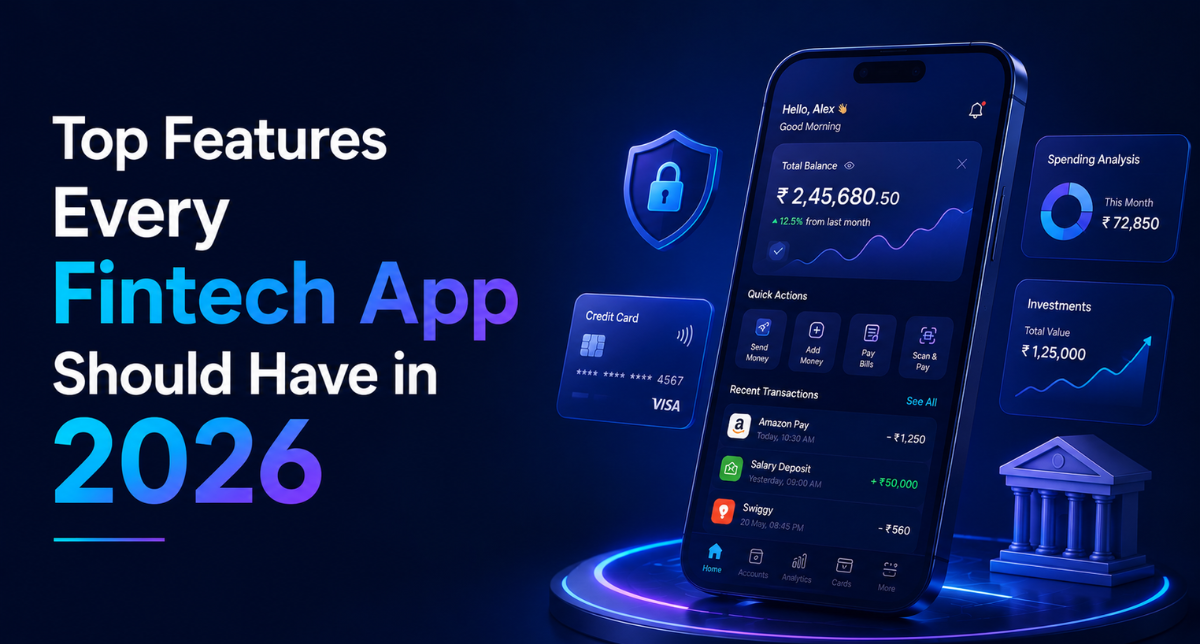
Fintech has become a part of everyday life in India. From paying for groceries with a quick UPI scan to checking investments on the phone, people now expect to manage their money in just a few taps. With this convenience, expectations have also gone up. Users want apps that are fast, secure, and genuinely helpful.
In 2026, simply offering basic transactions is no longer enough. The apps that win are the ones that build trust, use intelligence to add real value, and stay fully compliant with regulations. The supportive environment created by India Stack, UPI, and the RBI regulatory sandbox has made it easier than ever to build powerful financial products, which is why many businesses are partnering with fintech app development companies in India to bring their ideas to life.
So what separates a great fintech app from an average one? Here are the top features every fintech app should have in 2026.
1. Strong Security and Biometric Authentication
In fintech, security is the foundation of everything. A single weak point can destroy user trust instantly. Passwords alone are no longer enough.
Modern fintech apps rely on multi-factor authentication and biometric methods like fingerprint scanning, face recognition, and liveness detection. All sensitive data, both in transit and at rest, must be properly encrypted. Users will only keep their money in an app they feel is truly safe.
2. Smooth Onboarding with eKYC
The sign-up stage is where many apps lose users. A long or confusing process leads to drop-offs before the first transaction even happens.
This is where India’s digital infrastructure gives a real advantage. Aadhaar-based eKYC, DigiLocker for instant document verification, and OCR-based ID scanning allow users to complete verification in minutes. A progressive onboarding approach, asking only for what is needed at each step, keeps the process smooth while staying fully compliant.
3. UPI and Multiple Payment Options
For any fintech app in India, UPI integration is essential. It has become the default way people send and receive money, and users expect it to work instantly and reliably.
Beyond UPI, a strong app supports cards, net banking, digital wallets, and recurring payments. Giving users flexible, fast, and seamless payment options directly improves both satisfaction and retention.
4. AI-Powered Fraud Detection
As digital transactions grow, so do the threats. AI-powered fraud detection has moved from a premium feature to a basic requirement in 2026.
These systems monitor transactions in real time, learn normal user behaviour, and flag suspicious activity before it causes harm. Proactive fraud prevention protects both the user and the business, and it has become a key differentiator for serious financial apps.
5. AI-Driven Personalization and Insights
Users now expect their app to understand them. AI helps fintech apps analyse spending patterns, predict needs, and offer personalised guidance.
Smart budgeting suggestions, spending alerts, and tailored product recommendations make the app feel like a personal financial assistant rather than a simple tool. This kind of intelligence builds long-term engagement and loyalty.
6. Real-Time Transactions and Smart Notifications
Speed is everything in finance. Users want instant payments, instant transfers, and instant confirmation. Any delay creates anxiety and doubt.
Real-time processing, paired with clear and timely notifications, keeps users informed and confident. Well-designed alerts about account activity, due payments, and important updates also keep users engaged without feeling spammed.
7. Regulatory Compliance Built In
Fintech apps carry responsibilities that ordinary apps do not. They must follow rules around KYC, AML, data protection, and more. In India, this includes RBI guidelines and the Digital Personal Data Protection Act.
The smart approach is to build compliance into the app from day one, not patch it later. RegTech tools and automated compliance checks reduce manual effort and risk. Experienced fintech app development companies in India understand these requirements deeply, and they design data architecture and audit trails that meet regulatory standards from the start.
8. Open Banking and Account Aggregator Integration
Open banking is reshaping how users view their finances. Through the Account Aggregator framework, users can securely connect multiple bank accounts and financial data in one place, with their consent.
This gives them a complete financial picture inside a single app and enables smarter lending, investing, and money management. API-first design makes these integrations smooth and secure.
9. Personal Finance Management Tools
In 2026, users expect more than transactions. They want help managing their financial lives. Features like expense tracking, savings goals, budgeting tools, and clear visual dashboards have become standard.
These tools empower users to make better decisions and improve their financial health. When an app actively helps users save and plan, they are far more likely to stay.
10. Simple, Trustworthy UX and Accessibility
Finally, design plays a critical role in building trust. Clear layouts, predictable interactions, and transparent communication reassure users who are dealing with their hard-earned money.
The app should also be accessible to everyone, including users with disabilities. A clean, intuitive interface reduces confusion, builds confidence, and keeps users coming back.
Bringing It All Together
A successful fintech app in 2026 is not built on one standout feature. It comes from combining security, smart onboarding, seamless payments, intelligence, and compliance into one trustworthy experience. Miss any of these, and users quickly lose confidence.
India is in a unique position here. With UPI, India Stack, Aadhaar-based verification, the Account Aggregator framework, and a forward-looking RBI regulatory sandbox, the country offers one of the strongest foundations in the world for building financial products. This is why fintech app development companies in India are well placed to help businesses create apps that are secure, intelligent, compliant, and ready to scale.
For any business planning a fintech product, the goal is clear. Build something users trust with their money, and back it with the right features and the right development partner.